


In the 1973-74 season, SS Lazio did something legendary. They won the Serie A title (the Scudetto) for the very first time in their history. Normally, this is the ultimate “golden ticket.” It meant they should have played in the next season’s European Cup (which is today’s UEFA Champions League).
But instead of playing against the best of the best, Lazio spent the 1974-75 season stuck at home. Why? Because a few months earlier, they had turned a football match into a literal battlefield.
Founded in 1900 in Rome, Lazio is one of Italy’s oldest clubs and has long carried a complicated political and social identity, with parts of its fanbase and even some players associated with far‑right symbolism, especially in the 1970s.

Their first ever Serie A title came in 1973‑74, when a recently promoted, fiercely physical side shocked traditional powers like Juventus, Inter and Milan to win the Scudetto in the middle of Italy’s violent ‘Years of Lead’, in Italian: Anni di piombo. That title‑winning squad, remembered as the ‘Lazio of the pistols,’ was famous not just for its football but for internal splits, extremist politics and a reputation for turning matches into battles, all of which framed the chaos of that night, the one that shut their door.
The Storm of Italy
To understand this story, you have to know that the 1970s was a different world. There was no VAR, fewer cameras, and the games were way more aggressive. Lazio had a massive reputation for being “notorious” and “evil” on the pitch.
They were basically the “villains” of European football back then:
In 1970, they got into a massive street fight with Arsenal players.
Managers from other teams, like Manchester United’s Tommy Docherty, said they should be “banned for all time”.
Even the chairman of the Professional Footballers’ Association at the time said Lazio didn’t play by the rules.
The international drama started in the UEFA Cup (now the Europa League). Lazio was playing an English team called Ipswich Town.
In the first leg in England, Ipswich absolutely destroyed Lazio 4-0. This humiliated the Italians. By the time the second leg rolled around in Rome on 7 November 1973, the atmosphere was like a powder keg ready to explode.
Lazio actually had a superstar striker named Giorgio Chinaglia. He was a beast—he’d scored 24 goals in the Italian league that year. In this game against Ipswich, he was on fire and even scored a hat-trick.

The Match that Became a Riot
Lazio was winning the game 4-2. They were playing amazingly, but because they lost the first game so badly, they were still losing on aggregate score.
Term Check: Aggregate Score
In two-legged knockout games, you add the goals from both matches. Ipswich had 4, Lazio had 0 in the first game. In the second, Lazio had 4, Ipswich had 2. Total: 6-4 to Ipswich. Result, Lazio was losing.
The “explosion” happened in the 73rd minute. The referee gave Ipswich a penalty. Ipswich scored it, and the Lazio fans—and players—went absolutely ballistic.
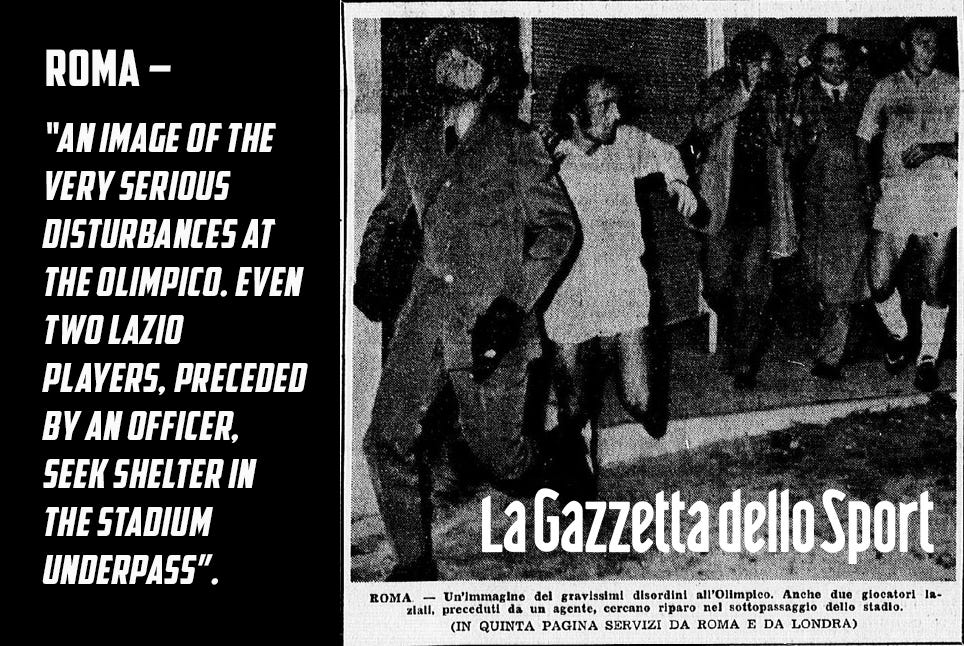
The stadium went nuts. Fans invaded the pitch, engaging in fights with police who were forced to use tear gas to disperse the "angry fans". British newspapers described the scene as "The Roman Storm," reporting that Union Jacks (UK flags) were burned in the stands while missiles—including bricks and bottles—rained down.
If the pitch was bad, the tunnel leading to the dressing rooms was a horror movie. As the Ipswich players tried to escape the chaos, the Lazio players allegedly attacked them.
Ipswich’s goalkeeper, David Best, was “hacked down” from behind and kicked while he was on the floor. Ipswich manager Bobby Robson was only three feet away and saw the whole thing. He claimed a Lazio player named Giuseppe Wilson was the one who kicked Best. It was so scary that Best said it was the “most frightening experience” of his life.
The Punishment
The press was horrified. Headlines called Lazio the “Evil Men of Europe”. On 16 November 1973, UEFA dropped the hammer:
The Ban: Lazio was banned from all international competitions for one year.
The Fine: They were fined £1,500 (which was a lot of money back then).
Here is the part that really hurts for Lazio fans. While they were banned from Europe, they were playing the best football in Italy. They won the 1973-74 Serie A title.
Under normal rules, the winner of the Italian league gets to play in the European Cup (the Champions League). It’s the highest honour in club football. But because of the riot against Ipswich, UEFA said “No”.
Lazio became the “Champion without a European Cup”. They had the trophy, they had the superstar (Chinaglia), but they were stuck at home because of their own bad behaviour.
The 25-Year Wait
Unfortunately, the consequences lasted way longer than just one year. After that championship-winning team broke up, Lazio struggled. They didn’t get another chance to play in the top European competition (rebranded as the UEFA Champions League) until the 1999-2000 season.
That is 25 years of waiting. An entire generation of fans grew up never seeing their team play in the biggest tournament in the world, all because of one night of thuggery and war in Rome.
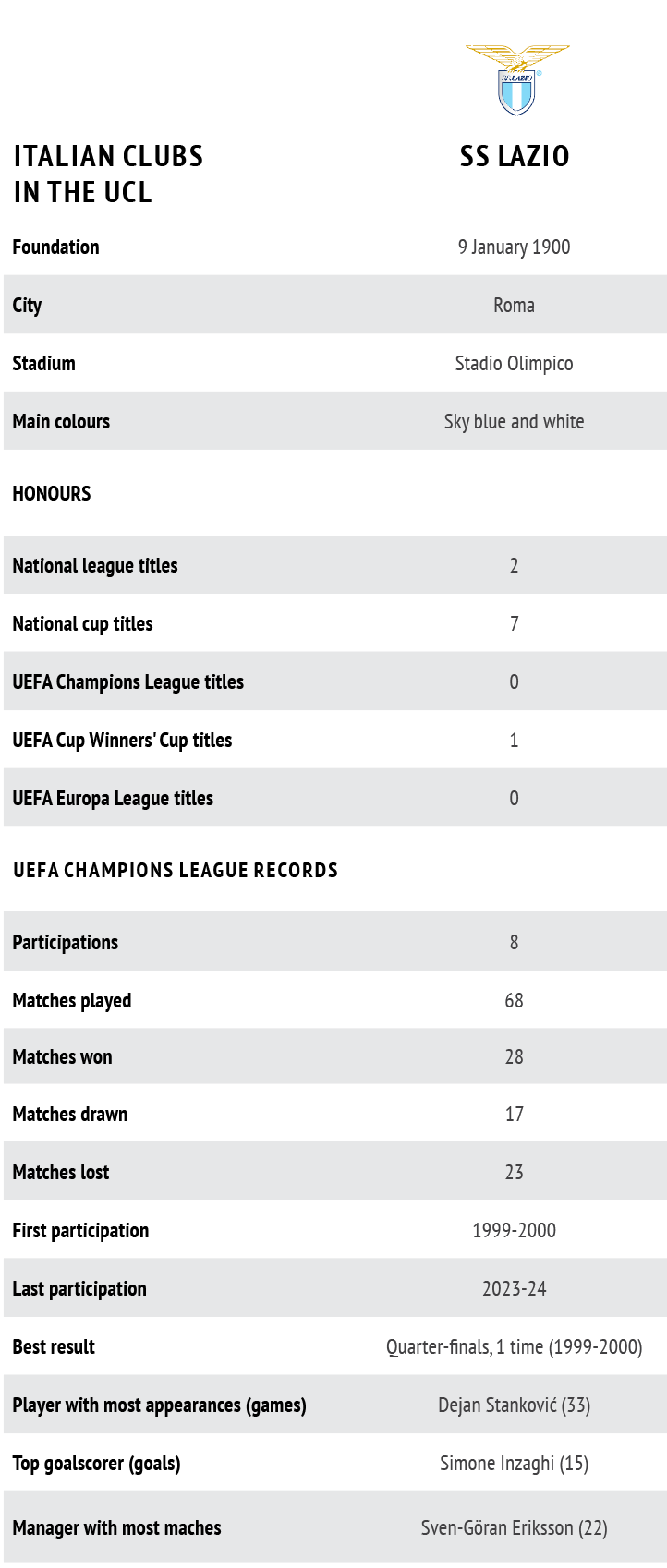
Here you have some club stats 👇
If you liked this article, also check:

Enjoyed this deep dive into football history?

If you want to explore the full story of every club that has ever competed on the European Cup/Champios League—from legendary giants to forgotten dynasties—check out European Cup: An Atlas of Champions. It features meticulously charted maps and profiles of over 550 clubs across 70 years of history.