


In the history of global football, the decade following the fall of the Soviet Union is often remembered for the rise of new, hungry nations. But for Azerbaijan, the early 2000s represented a different kind of history, an era of institutional collapse and a total blackout of the professional game. This is the story of the 2002–2003 season, the year the league justvanished.
While fans dreamt of international glory, the sport was held hostage by “Football Generals”—men who treated national federations not as sporting bodies, but as private domains.
The Iron Grip of Fuad Musayev
At the heart of Azerbaijan’s “Lost Decade” was Fuad Musayev, the first president of the AFFA (Association of Football Federations of Azerbaijan). A classic Soviet-style apparatchik, Musayev ran the sport with an iron fist for over eleven years.
Under his watch, the national team became a punching bag for Europe. The lowest point came in 1995 with a 10-0 drubbing by France. Despite the humiliation, Musayev remained untouchable. He operated in a “silk office,” insulated from the fans, focusing more on political survival and maintaining control over FIFA and UEFA funding than on fixing the crumbling pitches in Baku.
The Great Rebellion and the “League of Shadows”
By 2002, the tension reached a breaking point. The country’s top clubs—led by giants like Neftchi Baku and Shamkir—grew tired of the lack of transparency. They accused the AFFA of financial mismanagement and “dictatorial” scheduling.
The clubs launched a full-scale rebellion, refusing to play under the AFFA’s jurisdiction. They formed their own independent league, but the “Generals” struck back with total war:
The Shutdown: The federation declared the rebel clubs illegal.
The Blackout: For the entire 2002–2003 season, official football simply stopped. There were no recognized matches and no European qualification.
The Sanctions: FIFA and UEFA sided with the federation’s authority, suspending Azerbaijan from the international community.
For a year, the stadiums grew silent. A whole generation of players—men in their prime—saw their careers stall as the grass turned to dust and the fans were left with nothing but radio silence.
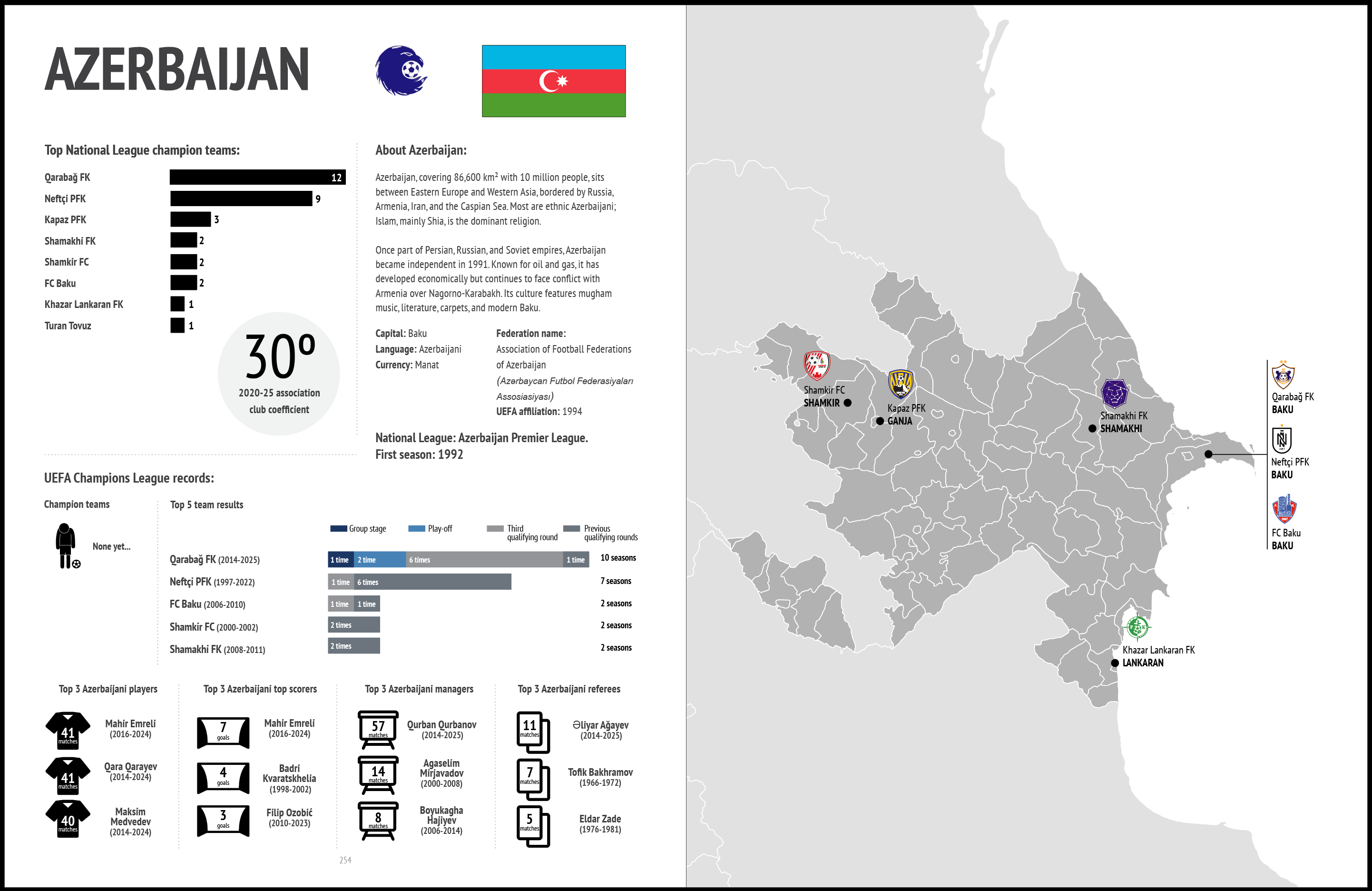
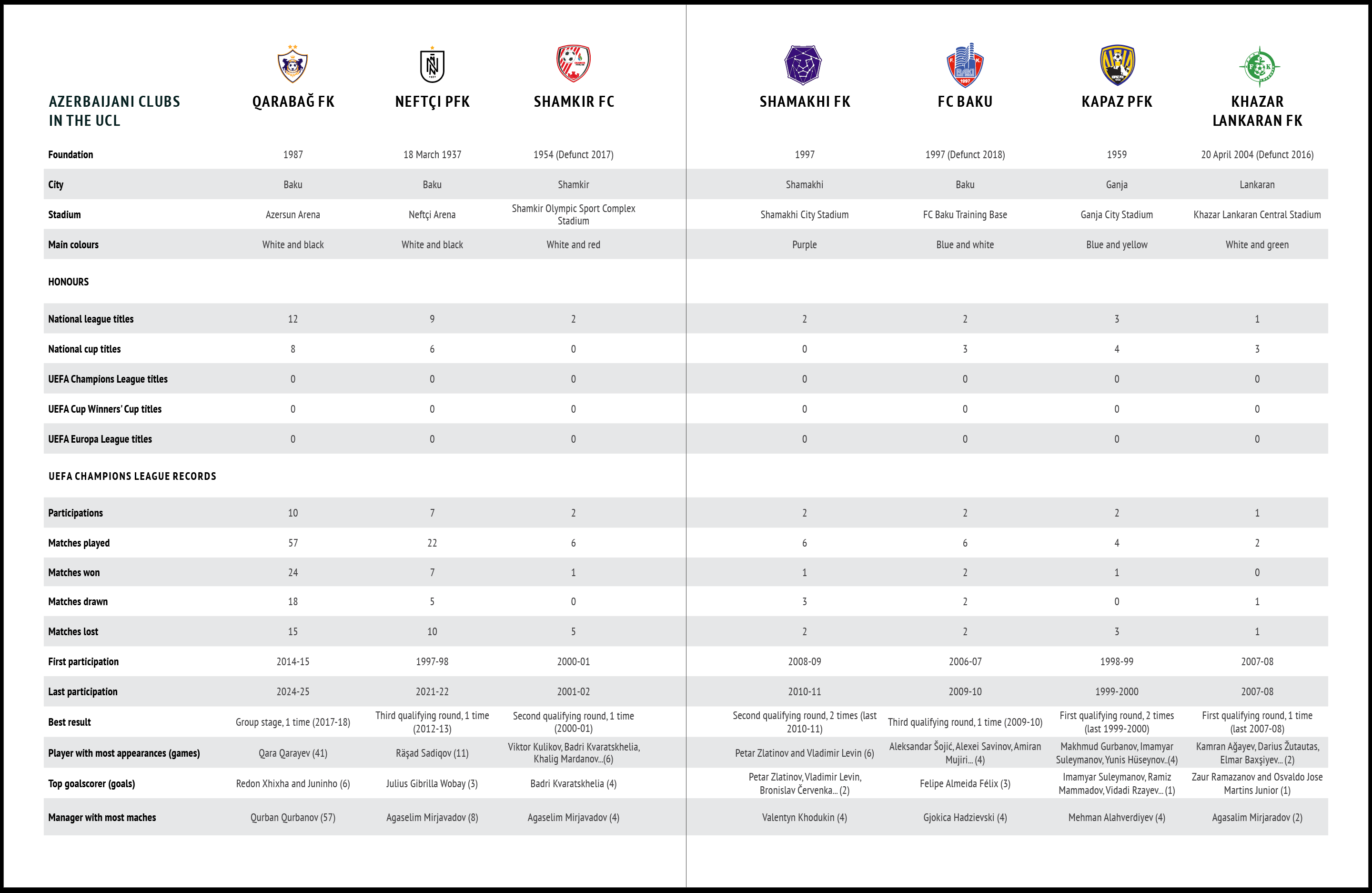
More data about Azerbaijan clubs up to 2026
A Global Pattern of Tyranny
Unfortunately, Azerbaijan was not an isolated case. In 2003, football across the globe was being used as a tool for ego and power:
Iraq: Under Uday Hussein, the national team lived in terror. A missed penalty wasn’t just a mistake; it was a crime. Players reported being imprisoned and tortured for losing matches. Here, the “Football General” was a literal tyrant’s son.
Russia: Vyacheslav Koloskov presided over the Russian Football Union for decades. Like Musayev, he was a master of bureaucracy, surviving scandals and poor performances while the domestic game struggled to modernize beyond its Soviet roots.
Brazil: Even in the land of Pelé, Ricardo Teixeira ran the game like a monarch. Backed by his political connections, he remained “invincible” for years despite constant allegations of corruption, using the success of Brazil’s players as a shield for his leadership.
The Lasting Scars
The “General” mentality treats football as a top-down hierarchy rather than a grassroots sport. The consequences for Azerbaijan were devastating:
Talent Stagnation: Without a league, young players had no platform. This created a decade-long “quality gap” in the national team that took years to bridge.
Infrastructure Decay: While neighboring nations were building modern arenas, Azerbaijani stadiums became dangerous, crumbling ruins.
The Trust Gap: The most painful loss was the fans’ passion. The “beautiful game” had become a sordid political soap opera, and it took a generation for the public to return to the stands.
Lessons from the Abyss
The 2002–2003 blackout eventually forced a change. The sheer scale of the disaster meant Musayev could no longer hold on. His departure marked the slow, painful beginning of a new era.
Today, Azerbaijan boasts some of the most modern stadiums in Europe and has hosted major finals. However, the ghost of the “Football Generals” serves as a warning:
When football becomes about the men in suits rather than the kids with the ball, the game is the first thing to die.
This is a fascinating piece! The idea of “football generals” is especially compelling, it captures how authority, symbolism, and the game can intertwine in ways that shape national identity as much as results on the pitch.
It’s exactly the kind of article that reminds us football often tells us more about power and nationhood than most people think.