
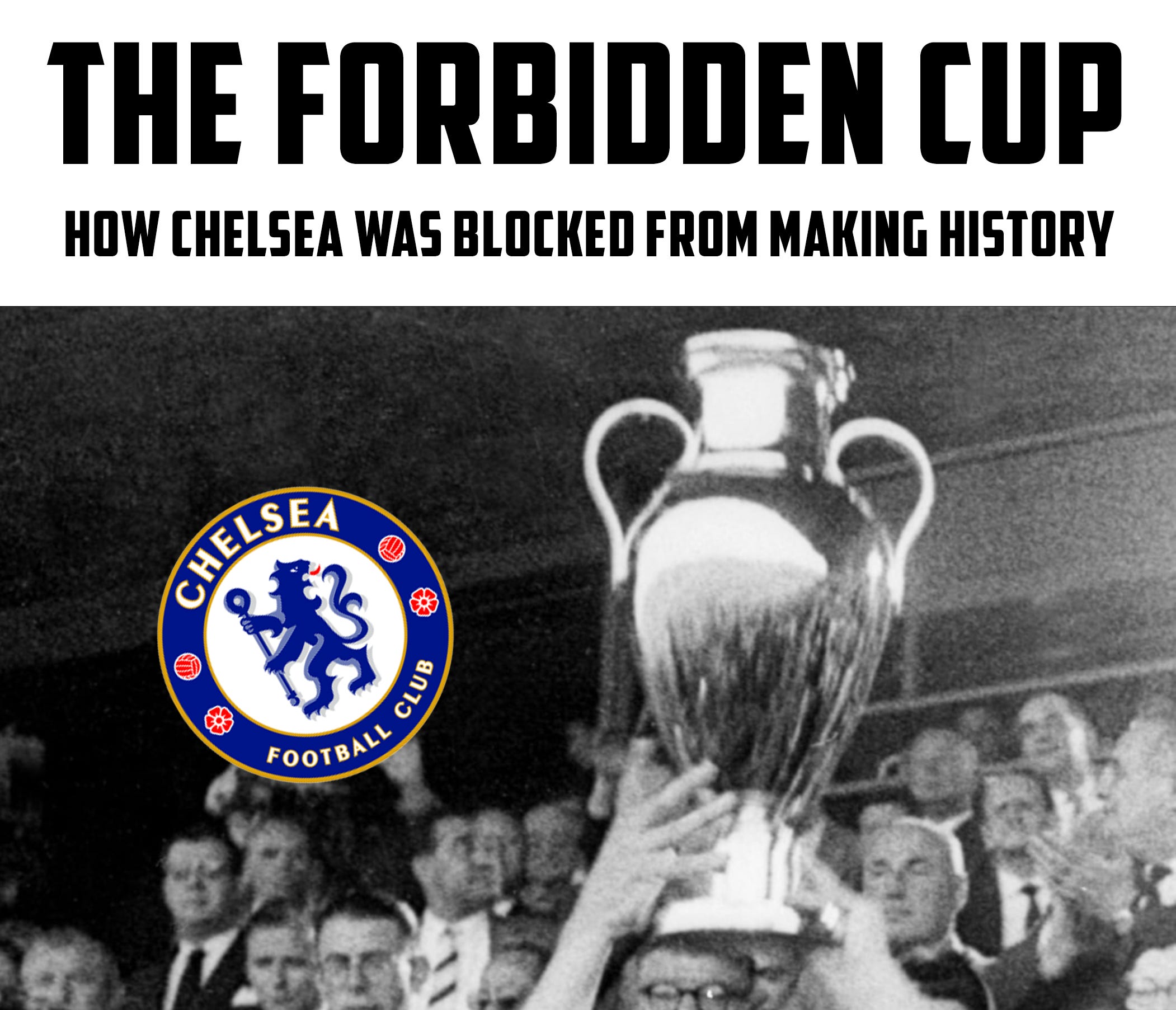
Today, looking back from the year 2026, Chelsea Football Club is a giant. They are famous all over Europe, having won the Champions League twice. But did you know there is a huge, strange gap in their history?
There was a time when Chelsea had to wait 44 years between their first chance to play in Europe and when they actually stepped onto the pitch.
To understand why, we have to travel back in time to the 1950s. This was a world of black-and-white newspapers and heavy leather footballs. It is the story of how Chelsea won big, but were then forced to quit the very first European Cup.
Part I: The Golden Champions (1954-55)
The 1954-55 season was set to be amazing for the Blues (there were not still known as “The Blues yet”, that happened in the 1960’s when Chelsea changed their kit colours to all blue with white socks, but still I like to name them like that). It was the club’s 50th birthday—their “Golden Jubilee”—and they wanted to celebrate in style.
They had a manager named Ted Drake. Before him, people thought Chelsea was a bit of a joke. But Drake turned them into a strong, scary team.

The big moment came in April 1955. Chelsea played against Sheffield Wednesday. The math was simple: if they won, they were champions. But Chelsea didn’t just win; they crushed them 3-0 and the fans at Stamford Bridge went wild. For the first time in 50 years, Chelsea were the Kings of England. But winning the league was about to get even more exciting. A few months earlier, people had decided that the next season (1955-56) would have a brand-new tournament: The European Cup.
The idea was to take 16 champion teams from different countries and have them battle to see who was the best in all of Europe. Since Chelsea just won the English league, the ticket belonged to them.
Part II: A Brand New Tournament is Born
While Chelsea was celebrating in London, the rules of European football were being written in Paris, France. So on April 2, 1955, exciting news came out. The first “European Football Cup” was created. It was organized by a French newspaper called L’Équipe.
The rules were simple and ruthless:
Knock-out style: If you lose, you go home. No second chances.
Two games: You play one game at your stadium, and one game at their stadium.
Fast schedule: The first games would happen by October 1955.
It was a revolutionary idea. For the first time ever, there was a real way to prove which club was the best in the world.
Part III: Chelsea vs. The Swedish Champs
By July 1955, everyone was buzzing with excitement. The names were drawn from a hat to see who would play who and Chelsea got a really cool matchup. They were drawn to play against Djurgården, the champions of Sweden. Everything was ready. The dates were being set. Both teams were ready to play.
There were other huge games planned too:
Real Madrid (Spain) vs. Servette (Switzerland)
Milan (Italy) vs. Saarbrücken (Germany)
Rot-Weiss Essen (Germany) vs. Hibernian (Scotland)
Notice that last one? Hibernian, a team from Scotland, was invited too. They were 100% ready to go. Chelsea had the invite, the opponent, and the talent. But they were missing one thing: Permission.
Part IV: The “No way” from the Bosses
Just as things were getting exciting, the people in charge of English football ruined the party. It seems crazy to us now, because the Champions League is so famous, but back then, the Football Association (The FA) and the Football League didn’t like it.
On July 27, 1955, the newspaper headlines read: “CHELSEA GET KO BEFORE GAME.”

The bosses of the English League “asked” Chelsea not to go to the European Cup. And in the 1950s, a “request” from the bosses was actually an order. You couldn’t say no.
Why did they stop Chelsea? The FA gave a very boring reason. They said the European Cup would be a “distraction.”
Too many games: They claimed playing in Europe would make the players too tired for the English league.
Workload: They did the math and said if Chelsea went to the final, they would have to play 10 extra games.
To a modern fan, complaining about 10 extra games sounds silly. But the FA was stubborn. They thought the English League was the only thing that mattered. So, Chelsea had to pull out.

Part V: The Reaction, Everyone Was Upset
The people organizing the tournament in Europe were not happy. They really wanted an English team involved to make the tournament look important. Newspapers reported that the European President, Mr. Schwartz, was frustrated. He said, “We are very sore about their not being able to fulfil the fixture.”
Basically, they were hurt. The games against Djurgården were already planned. Now, the Swedish team had nobody to play against and the Djurgården asked if they could find a replacement team because six other countries were begging to take Chelsea’s spot.
Let’s not forget, the most embarrassing part for the English bosses was when they had to look at their neighbours, Scotland. The Scottish team, Hibernian, ignored the haters and played in the tournament anyway because they wanted the experience. They saw the future, while the English FA was stuck in the past.
Part VI: The Aftermath and the Regret
The 1955-56 European Cup went ahead without Chelsea. And guess what? It was a huge success. Fans loved it and newspapers loved it. Real Madrid won the final in Paris and started a dynasty, becoming the most famous team in the world.
The English FA realized they had made a huge mistake. They had to eat “humble pie” (admit they were wrong). When Manchester United won the English league the very next year, the FA allowed them to go play in Europe.
By May 1956, everyone admitted the tournament was a hit. Manchester United got to be the first English team to officially play. Chelsea, the team that should have been first, had to watch from home.
Part VII: 44 years later…
That ban hurt Chelsea for a long time. After winning the league in 1955, the team started to struggle and wouldn’t be the best in England again for decades.
It took 44 years for Chelsea to finally hear the Champions League music. They finally played in the 1999-2000 season. They had to win a qualifying match against a team from Latvia just to get in. But once they arrived, they made up for lost time.
And today, if we look at the records up to 2026, Chelsea is a monster in Europe. They missed their first shot, but they have since won the big trophy twice.
Here is their amazing record:
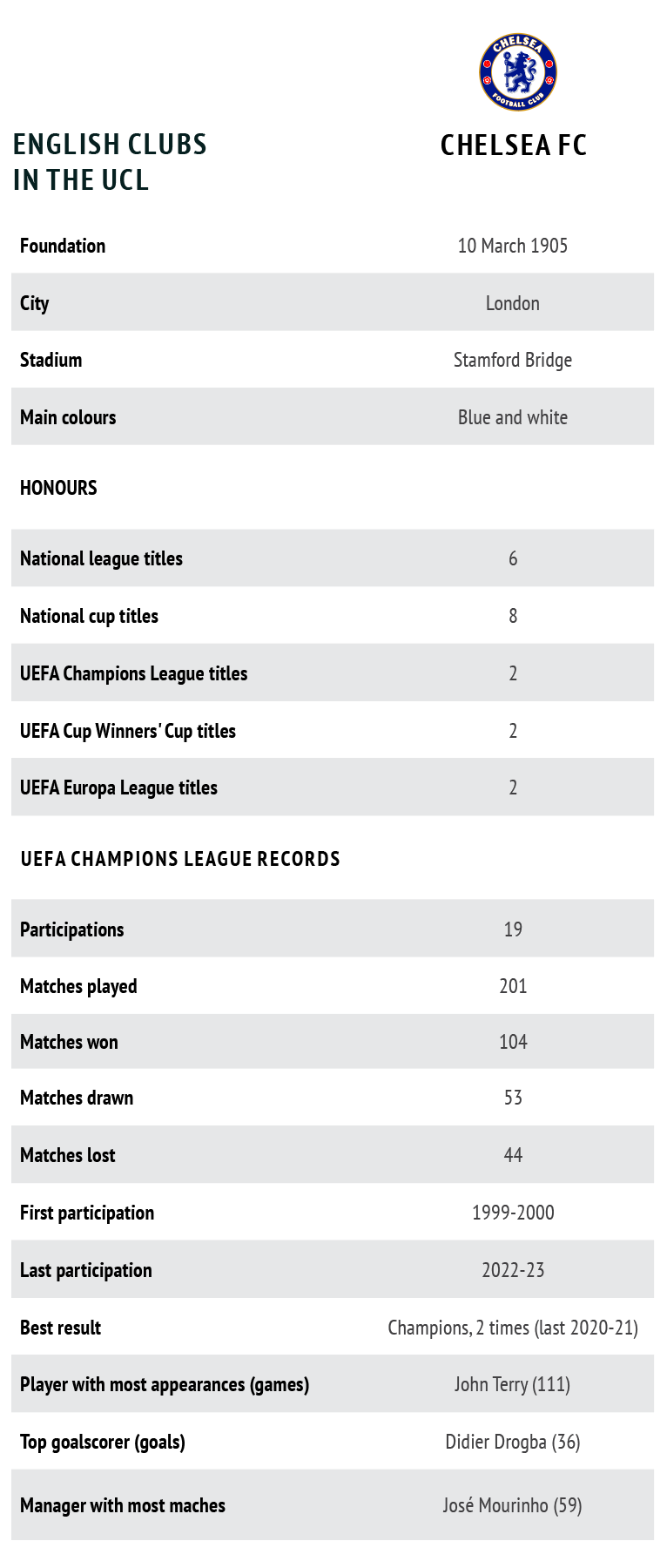
🏆 Champions: Winners in 2012 and 2021.
🥈 Finalists: Came second in 2008.
🌍 Always there: By 2026, they have played in the Champions League 20 times.
💪 Strong: They almost always make it past the group stages. Once, when they didn’t, they went and won the Europa League instead.
Legends of the Club:
John Terry: Played 111 matches. The Captain.
Didier Drogba: Scored 36 goals. The hero of the big moments.
José Mourinho: The manager who turned them into a European powerhouse.
Biggest Rival: FC Barcelona. They have played 15 crazy games against them.
The Trophy Cabinet The “distraction” the FA was scared of in 1955 is now the thing Chelsea is most famous for. They have won every major international trophy possible:
2x Champions League
2x Europa League
1x Conference League
2x Super Cup
2x Club World Cup
What Could Have Been?
Fans and historians still ask the big question: How far would Chelsea have gone in 1955? They would have played Djurgården, a team they definitely could have beaten. Real Madrid was just starting to get good, but they weren’t unbeatable yet. Chelsea was a strong, tough team that had just conquered England the same year.
The decision to ban Chelsea was a huge mistake by the bosses. They were scared of a few extra games, and because of that, they delayed English football history 😪
We cannot change the past. But the Chelsea of today has proven the doubters of 1955 wrong. They didn’t just join the competition eventually; they mastered it.
What do you think? If Chelsea had played in 1955, do you think they could have stopped Real Madrid from becoming kings of Europe?
Did you like this dive into football history?
If you want to explore the full story of every club that has ever competed on the European Cup/Champios League—from legendary giants to forgotten dynasties—check out 📘 European Cup: An Atlas of Champions. It features meticulously charted maps and profiles of over 550 clubs across 70 years of history, like the one you have seen of the Chelsea FC before.