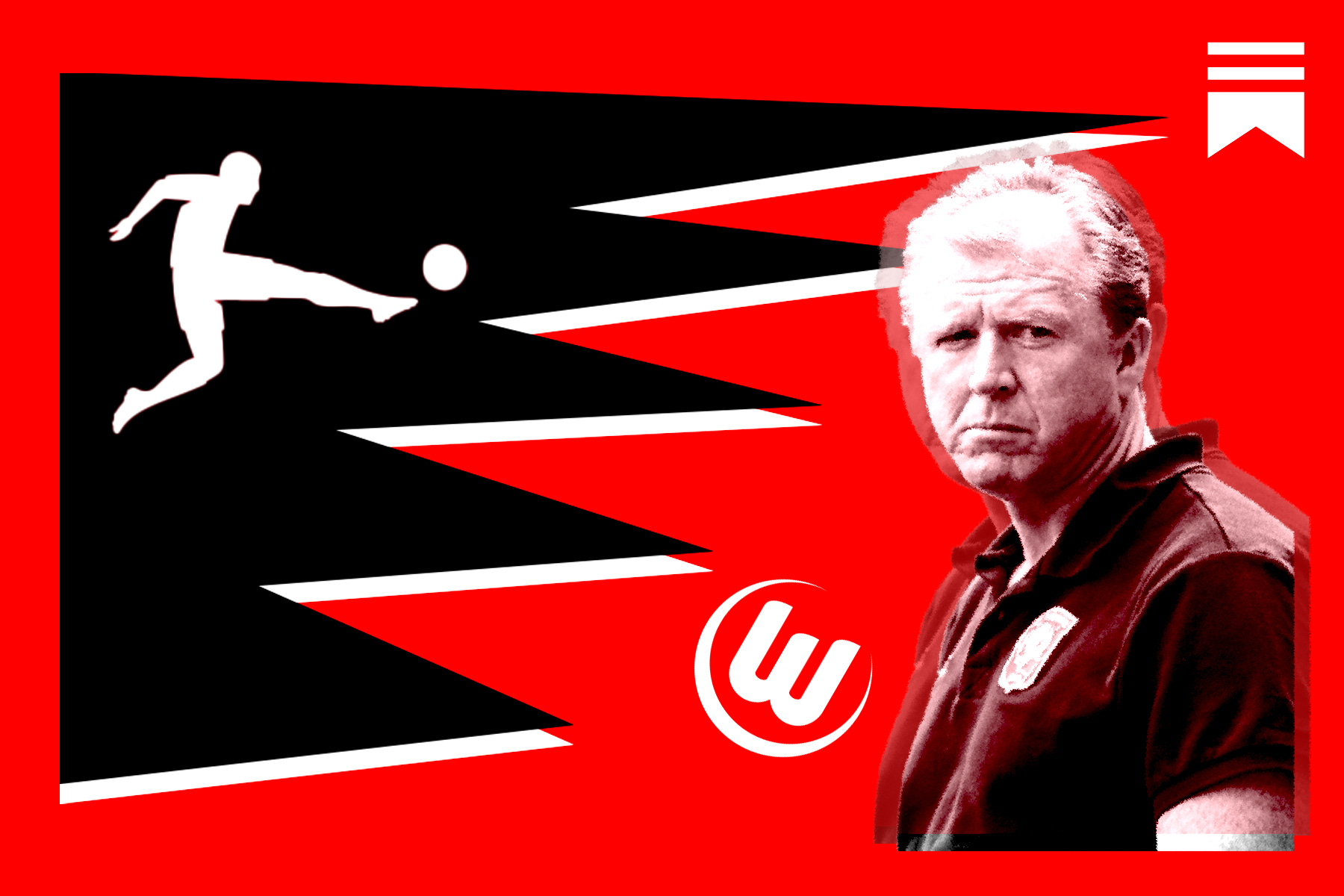
A bit of context… the summer of 2010 carried with it a promise of rebirth. As Steve McClaren walked through the doors of the Volkswagen Arena, he was not merely a coach in a new league. Remember?
He was an English pioneer entering German football’s heartland, a man attempting to rewrite both his own story and that of his nation’s coaches abroad. For the first time since the Bundesliga’s creation in 1963, a German club had entrusted it to an Englishman. Fresh from guiding FC Twente to a historic Eredivisie title, McClaren’s arrival was framed as both redemption and revolution: an Englishman with Dutch tactical schooling, about to test himself in the unforgiving intensity of German football.
Yet the fairy tale never materialized. What began as a bold experiment unraveled into a nine months that exposed the cultural and tactical chasmbetween two footballing nations.
Redemption’s way
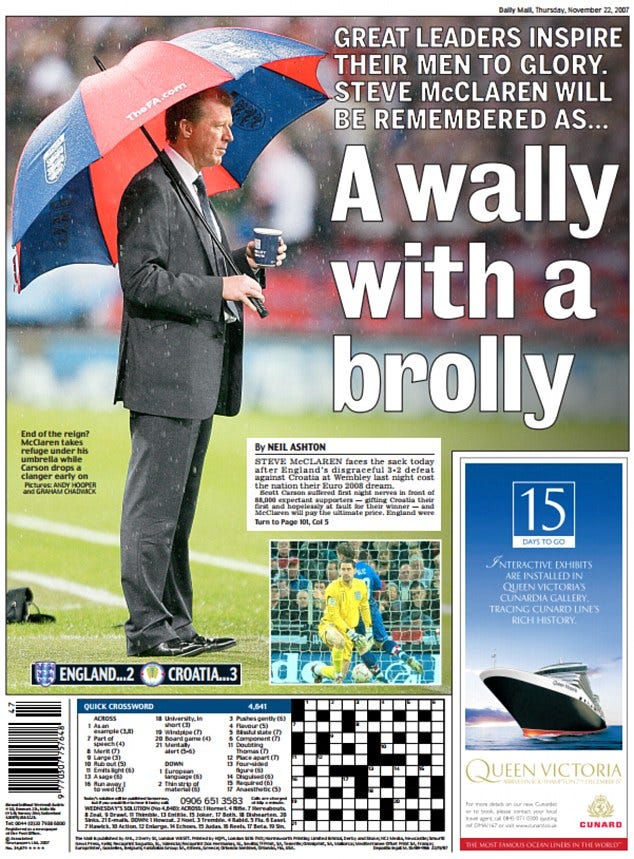
McClaren’s journey to Wolfsburg was a football odyssey defined by dizzying heights and painful lows. At Manchester United, as Sir Alex Ferguson’s assistant, he had helped script the famous treble of 1999. At Middlesbrough, he made history by delivering the club’s first ever trophy — the 2004 League Cup — and guiding them to the UEFA Cup final in 2006. But it was his way as England manager that marked his name into folklore for all the wrong reasons. Failing to qualify for Euro 2008, and standing on the Wembley touchline with an umbrella in the rain during a crushing defeat to Croatia, McClaren was immortalized as “The Wally with the Brolly”.
His resurrection came in the Netherlands, where he meticulously rebuilt his reputation at Twente. Discipline, tactical clarity and belief carried the small Dutch club past giants PSV and Ajax to a first league title in their history.
So, when Wolfsburg called, it was more than just another job — it was a chance to show that an English coach could master the most tactically intricate of Europe’s leagues.
Wolfsburg, however, were not the same beast that had stormed into the Bundesliga crown under Felix Magath in 2009. That title had been forged in relentless physical conditioning and the partnership of Edin Džeko and Grafite. By the time McClaren arrived, the roar had gone. The club had stumbled to eighth place in 2009–10, weighed down by the dual burden of Champions League football and the loss of their championship momentum.
McClaren inherited a squad in flux. The championship core — Džeko, Josué, Misimović — remained, but around them were new high-profile signings: Diego Ribas from Juventus, Denmark’s Thomas Kahlenberg, Palermo’s young defender Simon Kjær, and a raw but hungry Mario Mandžukić from Dinamo Zagreb. On paper, the squad looked like an international all-star team: Italy’s Andrea Barzagli, Switzerland’s Diego Benaglio, Japan’s Makoto Hasebe, Germany’s Marcel Schäfer. But football is not played on paper, and chemistry is never guaranteed by the weight of passports.
When Philosophy clash
McClaren sought to transplant his Dutch blueprint of fluid, possession-based football onto a side schooled in Magath’s rigid, direct system. The result was a clash of philosophies. Players struggled to adapt, and the friction became most visible with Diego, the supremely talented Brazilian playmaker whose flair often ignored collective discipline, unfortunately.
The breaking point arrived on a cold February afternoon against Hannover 96. Wolfsburg were awarded a penalty, and McClaren instructed new striker Patrick Helmes to take it. Diego refused, seized the ball, and missed. A 1–0 defeat followed. The moment, trivial in isolation, symbolized everything: a manager’s authority undermined, a squad fragmented, and a club teetering towards crisis. Sporting director Dieter Hoeness was damning: “The players argued about it like kids in a playground. And because of that, we lost a match we should never have lost.” From that penalty spot, McClaren’s authority evaporated.
Results That Told Their Own Story
On the pitch, the numbers were unforgiving. Across 21 Bundesliga matches, Wolfsburg recorded just five wins. Eight draws and eight defeats left them 13th in the table, a single point above the relegation play-off. The team scored 26 goals, conceded 30, and played like shadows of their former selves. The nadir arrived in the DFB-Pokal, where second-division Energie Cottbus humbled them, erasing any illusions of stability.
For a club crowned champions only 20 months earlier, the fall was brutal. By February 2011, with results worsening and belief gone, Wolfsburg dismissed McClaren just nine months into his two-year contract. Pierre Littbarski was drafted in to steady the ship, but the damage had been done.
The Lone Wolf
McClaren’s Wolfsburg adventure remains unique: he is still the only Englishman ever to have managed in the Bundesliga. His story is not remembered for tactical genius or silverware, but for what it revealed about the challenge of English coaches abroad. Where Sir Bobby Robson once thrived in Portugal and Spain, and Roy Hodgson carved niches across Scandinavia, McClaren found no foothold in Germany.
And yet, his spell in Wolfsburg endures as both a trailblazing anomaly and a cautionary tale. The image is powerful: an Englishman crossing the Rhine in search of redemption, only to find himself consumed by the unforgiving forest of German football.
To this day, Steve McClaren is remembered in Germany not as a conqueror, but as the lost wolf — a lone pioneer whose howl was silenced before it could echo.
Thanks for reading! Subscribe for free to receive new posts and support my work.